The short answer
Some LED neon strip lights can be cut, but only at the marked cutting points specified by the manufacturer. The cut end must be connected and sealed correctly, especially for outdoor or waterproof projects.
Compared with ordinary LED strip lights, LED neon flex usually needs more attention to profile direction, bending radius, end caps, cable exits and mounting accessories.
What LED neon strip light means
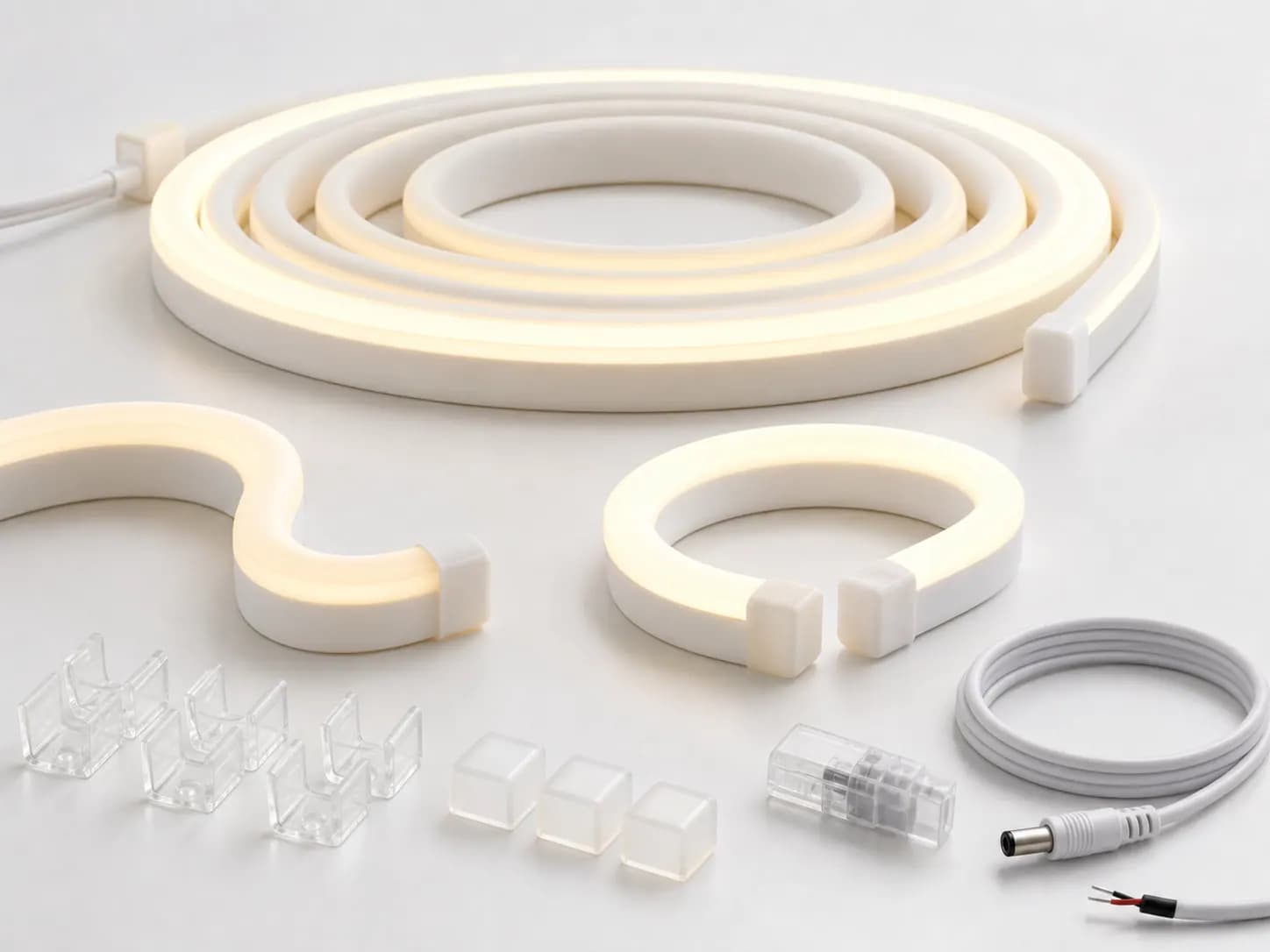
LED neon strip light usually refers to flexible LED neon flex: LEDs are placed inside a silicone or PVC body to create a soft, continuous neon-like line. It is used for signage, wall outlines, facade contours, furniture lines and decorative commercial lighting.
It is different from bare LED strip because the diffuser body, bending direction and waterproof structure are part of the product design. That is why cutting and installation rules are stricter.
Can LED neon strips be cut
Many LED neon flex products are cuttable, but not at any random position. The supplier should provide the cutting unit, cutting marks and accessory method for the exact model.
After cutting, the end cap, cable exit and sealing treatment are important. A poorly sealed cut end can cause moisture failure even if the neon body itself has a high IP rating.
How to connect neon strip lights
LED neon strips connect to a matching low-voltage power supply through the correct polarity and cable exit. RGB, RGBW or DMX versions also need the correct controller and channel wiring.
For project orders, factory-prepared cable exits are often safer than field connections. They reduce installation time and help keep waterproof treatment consistent.
Installing neon strip lights on a wall
Wall installation normally uses clips, aluminum channels or mounting tracks instead of relying on adhesive alone. The mounting method should match the neon profile size and bending direction.
Before installation, mark the route, cable exit point, controller location and power supply position. Test the neon strip before final fixing, especially when the project includes long runs or color control.
Making neon signs with LED strips
For logo, letter or sign projects, LED neon flex is usually a better fit than a bare LED strip because it creates a cleaner continuous light line and hides individual LED points.
Send the supplier artwork with dimensions, bending direction, required color, total length, cable exit position and installation surface. These details affect profile selection and quotation.
Outdoor and waterproof notes
Outdoor neon strip projects need more than an IP rating. Cable exits, end caps, mounting direction, sunlight exposure, drainage and installer cutting method all affect reliability.
If the neon will be used outside, ask whether the supplier recommends factory-cut lengths, molded cable exits, sealed end caps and specific mounting clips.
Buyer checklist before quotation
Prepare profile type, top-bend or side-bend direction, voltage, color, IP rating, total length, cut length, cable direction, mounting accessories, controller requirement and quantity.
For repeat orders, keep the same model code, silicone profile, color bin, cutting unit and packing requirement. Small profile changes can affect brightness, bendability and installation fit.
FAQ
Can you cut neon LED strips?
Yes, many models can be cut, but only at the marked cutting points and with the correct end sealing or connector method.
How do you install neon strip lights on a wall?
Use clips, channels or mounting tracks matched to the neon profile. Plan the route and test the strip before final fixing.
Can LED neon strip lights be used outdoors?
Outdoor-ready versions are available, but the IP rating, cable exits, end caps and installation method must be confirmed.