The short answer
Yes, many LED strip lights can be cut, but only at the marked cut lines. Cutting in the wrong place can break a circuit section and may leave part of the strip unable to light.
For project buyers, the more useful question is not only whether a strip can be cut, but how often it can be cut, how it will be reconnected and whether the supplier can provide the same cutting unit in repeat orders.
Where to cut LED strip lights
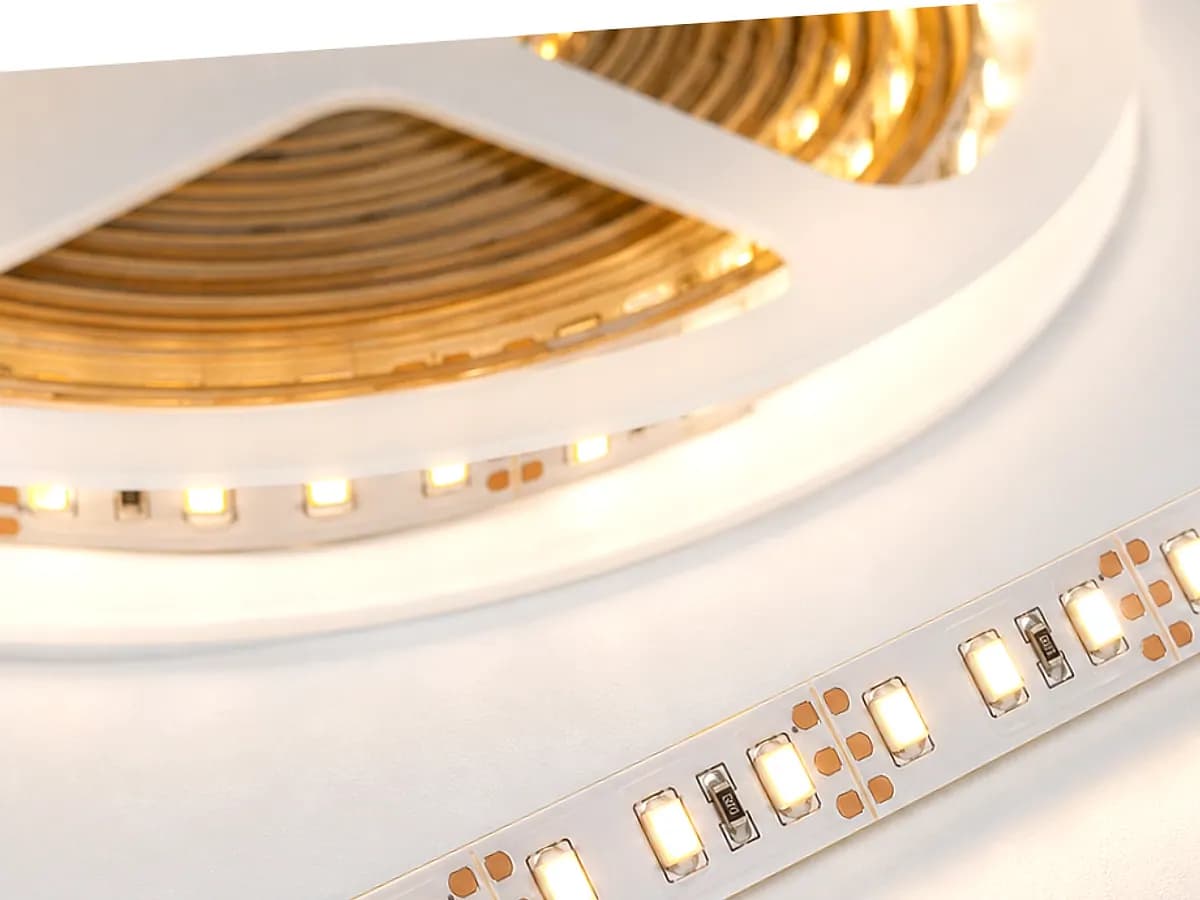
Most flexible LED strips show copper pads, scissors marks or printed cut symbols. The safe cutting point is normally across the copper pad area between circuit sections.
Different models have different cutting units. A 12V strip may cut every 3 LEDs, while a 24V strip may cut every 6 LEDs or by a longer segment depending on the circuit design.
What happens if you cut in the wrong place
If the strip is cut away from the marked point, the nearby LEDs may lose their circuit path. Sometimes only the small damaged section fails, but sometimes the strip becomes hard to reconnect cleanly.
For waterproof LED strips, incorrect cutting also damages the coating or silicone body. The new end must be sealed again if the strip will be used in damp or outdoor conditions.
Can cut strips still work
A correctly cut strip can still work when the remaining section receives the right voltage and polarity. The cut piece can also be reused if it is connected to a compatible power source or connector.
Buyers should confirm the connector type before ordering. COB, high-density SMD, narrow PCB and waterproof strips may need different connector solutions or soldering.
Cutting unit matters for projects
For cabinet, shelf and signage projects, the cutting unit affects how accurately the strip can match each measured length. A shorter cutting unit reduces wasted material and makes corners or small zones easier to plan.
When comparing quotations, ask suppliers to list voltage, PCB width, LED density, wattage per meter and cutting unit together. Two strips with the same price per meter may create different waste during installation.
Waterproof strip cutting notes
IP20 strips are usually simpler to cut and reconnect. IP65, IP67 or silicone-extruded versions need extra attention because the cut end must be sealed and the connector area must stay protected.
For outdoor orders, ask whether the supplier recommends factory-cut lengths, molded cable exits or field-cut accessories. Factory preparation can reduce installation risk on larger projects.
Checklist before bulk order
Confirm the exact required lengths, cutting unit, connector method, soldering requirement, IP rating, cable exit direction, voltage and whether installers will cut strips on site.
For repeat supply, keep the approved sample label and model code. If the factory changes LED density, voltage version or PCB design, the cutting unit may also change.
Final recommendation
Cut LED strip lights only at the marked cut lines, then reconnect or seal them with accessories that match the strip type. Never assume every LED strip can be cut at any point.
For distributors and contractors, request the cutting unit before sample approval. It affects installation accuracy, material waste, connector choice and after-sales risk.
FAQ
Can you cut LED strip lights anywhere?
No. Cut only at the marked copper pads or cut symbols. Cutting elsewhere can break the circuit section.
Will LED strip lights still work after cutting?
Yes, if they are cut at the correct point and powered with the correct voltage and polarity.
Can waterproof LED strips be cut?
Many can be cut, but the cut end must be sealed correctly if moisture protection is still required.