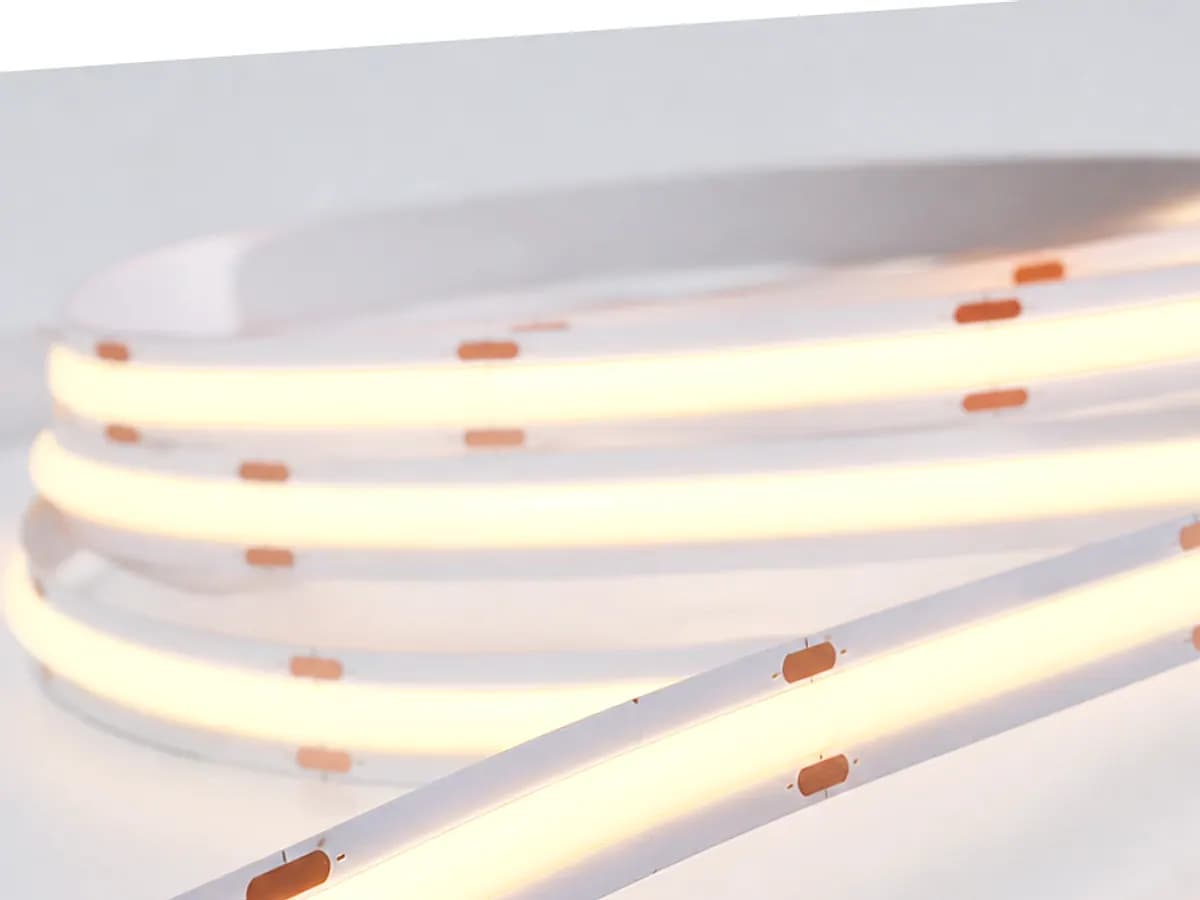
The short answer
Choose COB LED strip light by matching the application, voltage, wattage, PCB width, CRI, CCT, IP rating, cutting unit and connection method. For commercial projects, sample testing in the real profile is more reliable than choosing from photos.
A good quotation request should include the installation drawing, total length, target brightness, voltage, CCT or color, IP grade, quantity and destination country.
Start with the application
Cabinets, display shelves and furniture grooves often need smooth light in a narrow profile. Retail displays may need high CRI and stable CCT. Outdoor decorative lines need waterproof treatment and safe cable exits.
Once the application is clear, the supplier can recommend the suitable COB width, wattage, IP rating and accessory method instead of quoting a generic strip.
Choose voltage and wattage
12V COB strip can be practical for short runs and markets with common 12V accessories. 24V COB strip is often better for longer commercial runs because voltage drop is easier to manage.
Wattage affects brightness, heat and power supply size. A high-wattage COB strip may look brighter, but it also needs better heat management and a suitable aluminum profile.
Choose width, CCT and CRI
Ultra-narrow 3mm or 5mm COB strips fit slim grooves and compact channels, while 8mm, 10mm and 12mm versions provide more room for higher power, RGB/RGBW or special structures.
For furniture, retail shelves and display cases, CRI and CCT consistency matter. Buyers should confirm color temperature, CRI target, batch consistency and whether the approved sample can be repeated.
Confirm IP rating and cutting unit
IP20 is normally used for dry indoor profiles. IP65, IP66 or IP67 versions may be needed for damp or outdoor projects, but connector sealing, cable exits and installer cutting method must also be planned.
The cutting unit affects material waste and installation accuracy. Always ask for the exact cut length before approving samples, especially for cabinets, shelves and sign details with many short sections.
Sample approval checklist
Before bulk order, test the COB strip in the intended profile or installation distance. Record model code, voltage, wattage, CCT, CRI, width, IP rating, cutting unit, adhesive and connector method.
For distributor orders, keep the sample label and packing requirement aligned with the quotation so future repeat orders can match the approved version.
FAQ
How do I choose a COB LED strip?
Start with application, voltage, width, wattage, CCT, CRI, IP rating, cutting unit and connection method.
What information is needed for a COB LED strip quotation?
Send length, quantity, voltage, CCT or color, IP grade, profile size, drawing, packing request and destination country.
Is COB always better than SMD?
No. COB is strong for smooth visible lines, while SMD may be better for some high-output, RGB or cost-sensitive projects.