The short answer
Install LED strip lights by planning the route, cleaning the mounting surface, cutting only at marked points, connecting the right power supply and testing before final fixing.
For professional projects, the installation plan should also define aluminum profiles, diffuser type, cable exits, driver location, dimming method and maintenance access.
Plan the route before sticking
Measure every run before removing the adhesive backing. Mark corners, cable exits, power feed points and any places where the strip must be cut or connected.
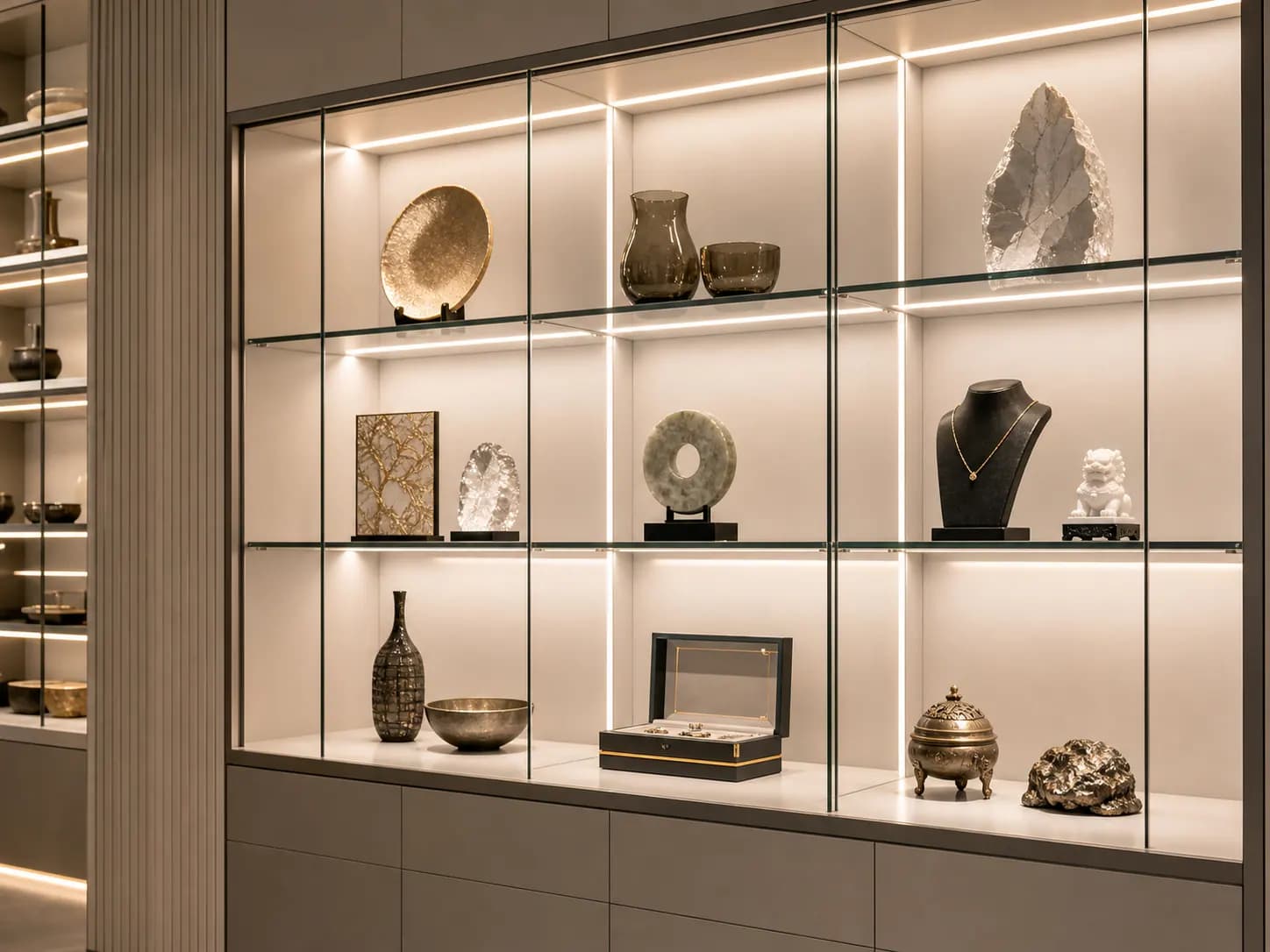
For cabinets, shelves and display cases, decide whether the strip should face down, toward the back panel or into an aluminum profile. The direction changes glare, shadow and visible dotting.
Prepare the mounting surface
The surface should be clean, dry and smooth. Dust, oil, paint residue or textured walls can reduce adhesive strength and cause the strip to fall later.
For commercial installations, adhesive alone may not be enough. Aluminum profiles, clips or mounting channels give better alignment, heat management and serviceability.
Use aluminum profiles when appearance matters
Profiles help protect the strip, improve heat dissipation and make the light line look more professional. A diffuser can reduce visible LED dots, especially for shallow viewing angles.
COB LED strips can create a smoother line in compact profiles, while SMD strips may need more profile depth or diffuser distance depending on LED density.
Power feed and driver position
Place the power supply where it can be ventilated, accessed and connected safely. Long cable distance between driver and strip can increase voltage drop.
For long ceiling coves or wall runs, plan power injection points before installation. It is much harder to fix uneven brightness after the strip is hidden behind a finished detail.
Cabinet and under-cabinet lighting
Under-cabinet LED strips should avoid direct glare into the user's eyes. Mounting the strip inside a profile near the front or back edge changes the beam and shadow on the work surface.
If the project uses 110V or mains-input drivers, confirm local electrical requirements and keep low-voltage strip wiring separate from unsafe field modifications.
Ceiling and wall installation
Ceiling coves need careful planning for straight lines, consistent distance from the wall and enough space for power feeds. Test the first section before completing the full run.
For wall installations, avoid dusty painted surfaces when relying on adhesive. A profile or mechanical fixing is usually more reliable for hotels, retail stores and public areas.
Test before final fixing
Power the strip before final installation to check color, brightness, polarity, dimming and controller response. For RGB or tunable white strips, test every channel.
After installation, check heat, voltage drop and visible seams. A quick test with only a short loose sample cannot prove that the full project run will perform correctly.
FAQ
How do you keep LED strip lights from falling off?
Clean the surface well and use profiles, clips or mounting channels when adhesive alone is not reliable.
Do LED strip lights need aluminum profiles?
Not always, but profiles improve appearance, heat management and protection in many commercial installations.
Can LED strip lights be installed on ceilings?
Yes. Ceiling runs should be planned with driver position, power injection, profile choice and access for maintenance.