OEM specification workflow
| Specification group | Required input | Approval evidence |
|---|---|---|
| Electrical | Voltage, W/m, circuit lengths, feeds, control architecture | Current datasheet and circuit review |
| Optical | CCT or color, CRI/R9 criteria, output target, consistency | Current reports and accepted sample |
| Mechanical/environmental | PCB width, cut interval, bends, mounting, exposure, IP construction | Drawing and representative assembly |
| Commercial/logistics | Forecast, order quantity, packaging, labels, destination, required documents | Supplier response and agreed order specification |
Bounded RFQ workflow
- Describe the application, installation environment, regulatory destination, and decision owner.
- Attach electrical, optical, dimensional, cable, connector, control, and packaging requirements.
- Mark every unknown as an open item rather than inventing a value.
- Request current documents and a representative sample tied to the proposed model or revision.
- Record accepted values, deviations, test method, artwork, sample reference, and change-control process.
This checklist does not claim Doen capacity, MOQ, certifications, warranty, lead time, or any exact product performance. Those items remain unknown until confirmed for the specific inquiry.
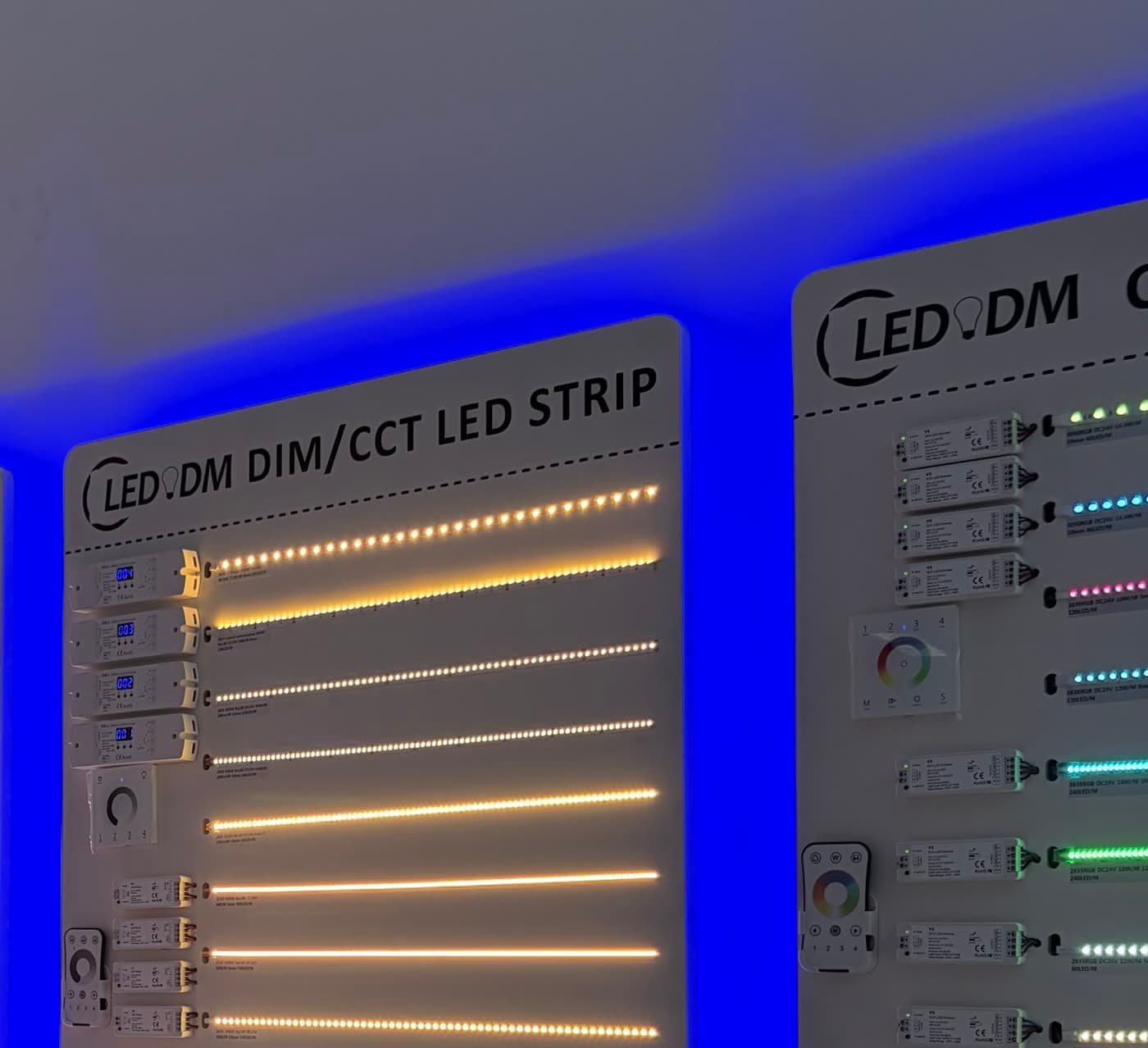
The image is a visual sample reference, not proof that a requested custom specification is available or approved.
FAQ
What should a custom COB LED strip RFQ include?
Include application, electrical, optical, mechanical, environmental, control, evidence, packaging, labeling, quantity, destination, and approval requirements.
Should buyers specify an MOQ before contacting a supplier?
State the required order quantity and forecast, then ask the supplier to confirm the applicable MOQ; do not assume one.
When is an OEM specification ready for production?
Only after required values, deviations, documents, representative sample, artwork, and change controls are reviewed and recorded.