Color-quality decision guide
| Input | What it indicates | Approval record |
|---|---|---|
| CRI 90 | A general color-rendering threshold | Exact model report and project requirement |
| CRI 95 | A higher general threshold, not proof of every color outcome | Exact model report and sample comparison |
| R9 | Rendering of a saturated red test color | Declared R9 value and application relevance |
| Spectrum and consistency | Energy distribution and unit-to-unit or batch appearance | Spectral file, tolerance requirement, and accepted sample |
Bounded evaluation workflow
- Define the materials, merchandise, skin tones, artwork, or task that must look acceptable.
- State the required CRI threshold and any R9 or other color-rendering criteria.
- Request current photometric or spectral evidence for the exact CCT and model.
- Define color-consistency and batch-approval requirements separately.
- Review a representative sample beside project materials and record the accepted reference.
Doen product values are not asserted on this page. Verify the exact offered model, CCT, test report, tolerance, and sample before ordering.
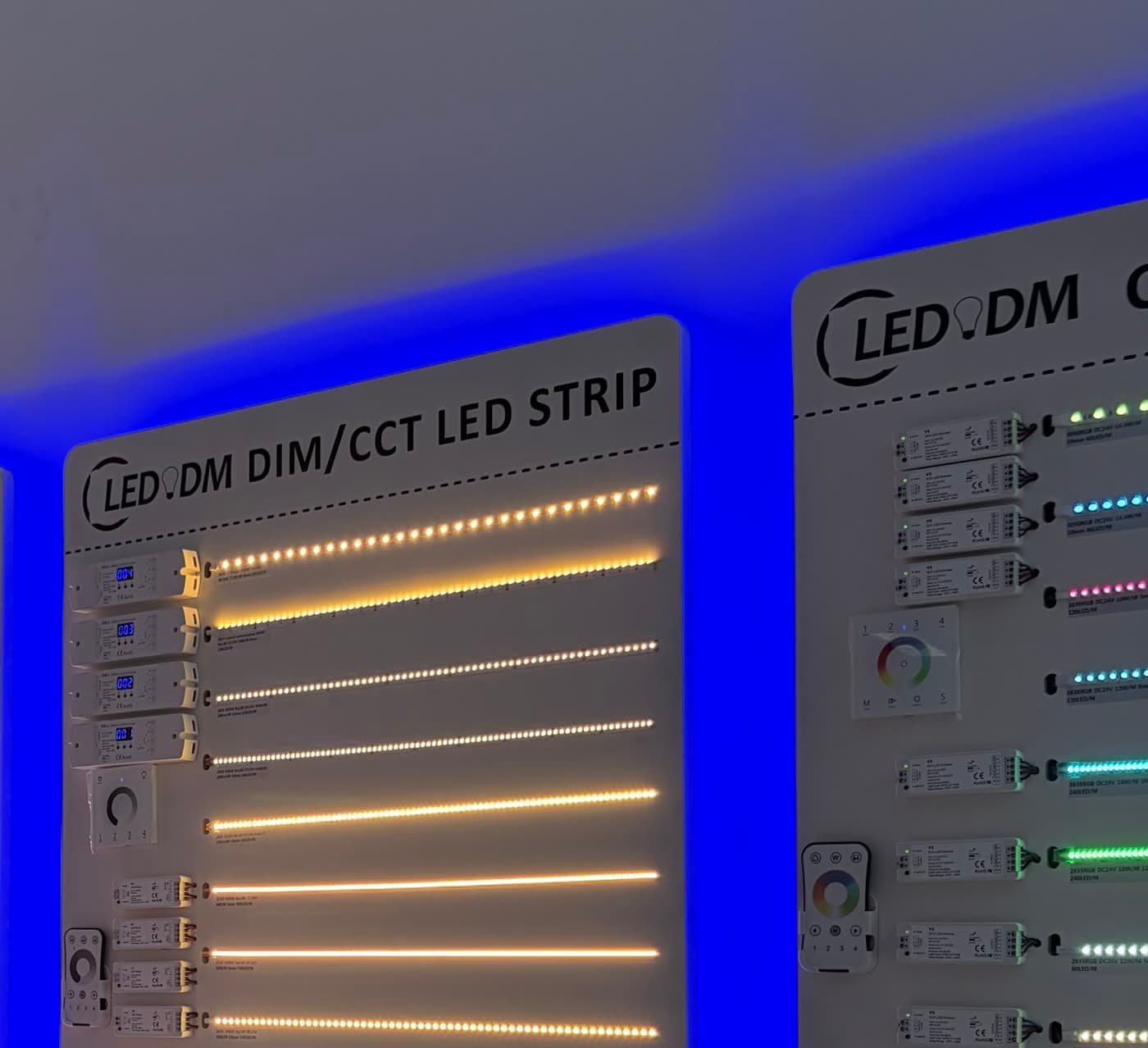
The image is a visual product reference, not evidence of CRI, R9, spectrum, or color consistency.
FAQ
Is CRI 95 always visibly better than CRI 90?
Not in every application. Compare the exact spectra and representative samples against the materials and acceptance criteria.
Why should a buyer specify R9?
R9 adds information about saturated red rendering that the general CRI average can obscure.
Does high CRI guarantee color consistency?
No. Color consistency and batch tolerance require separate specifications and verification.