Ingress-protection decision guide
| Rating | Evaluation context | What still needs verification |
|---|---|---|
| IP20 | Dry, protected interior locations | Touch, dust, cleaning, and enclosure conditions |
| IP65 | Possible spray or dust exposure where the exact construction is suitable | Direction, pressure, joints, and cut-end sealing |
| IP67 | Temporary immersion only where supported by the exact documentation | Depth, duration, cable exits, and site workmanship |
| IP68 | Documented continuous-immersion conditions | Declared test conditions, chemicals, temperature, and termination method |
Bounded evaluation workflow
- Document water, dust, cleaning, condensation, UV, salt, chemical, and mechanical exposure.
- Obtain the current construction drawing and IP test scope for the exact model.
- Define connectors, cable exits, cut-end sealing, drainage, channel, and fixing method.
- Prepare a representative sample using the actual site assembly process.
- Inspect and test the sample against the project method before procurement approval.
An IP rating is not a blanket guarantee for chemicals, salt, UV, immersion duration, thermal conditions, or installation quality. Cutting or terminating a strip can change the protection of the assembly.
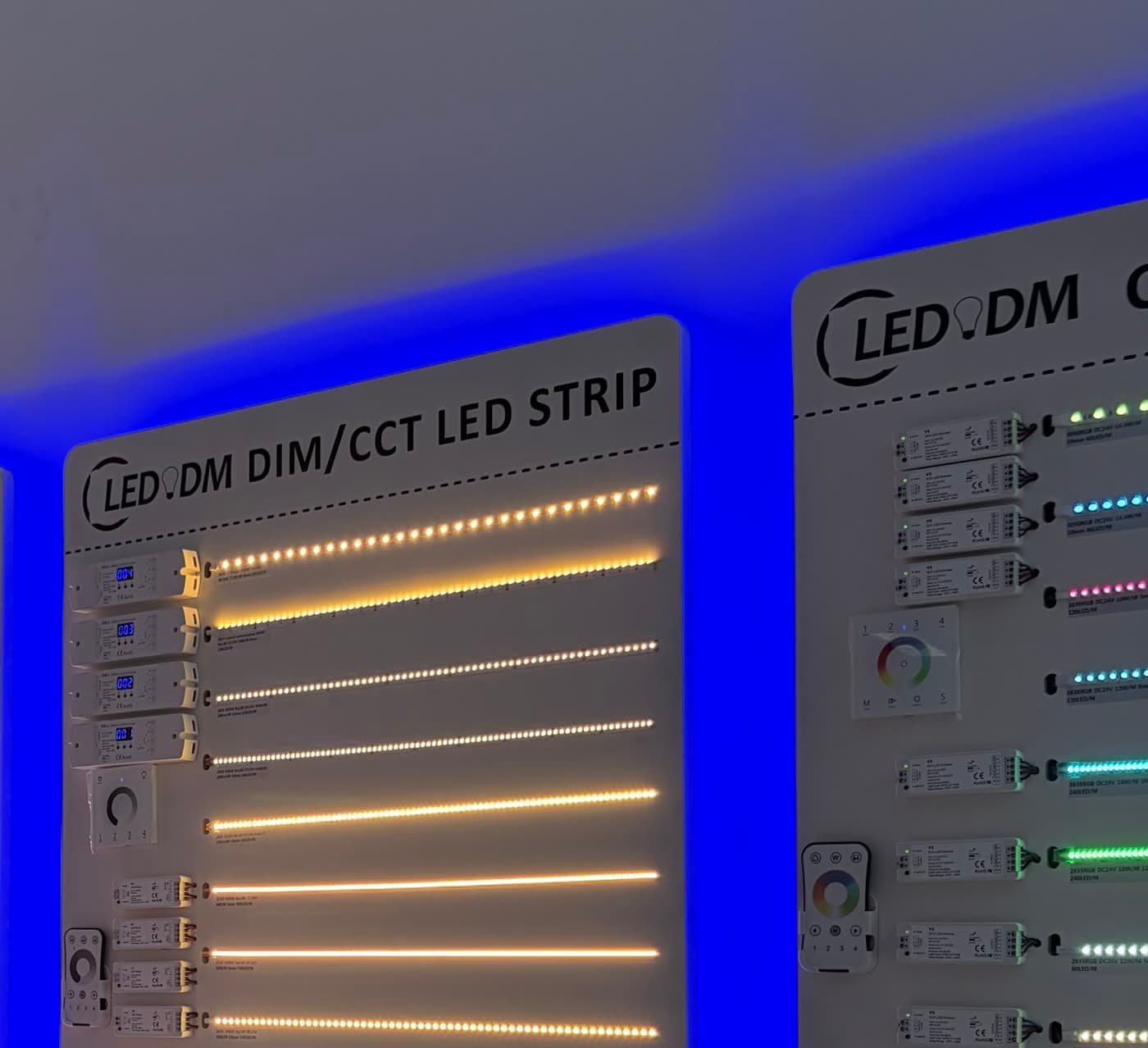
The image is a visual reference only and does not demonstrate an IP test result.
FAQ
Is IP68 always the safest choice?
No. Select the construction for the documented exposure and verify the complete installed assembly.
Does cutting a waterproof COB strip affect protection?
It can. The cut end and every termination need the approved sealing process for the selected construction.
Does an IP rating cover salt water or chemicals?
Not automatically. Confirm chemical and environmental compatibility separately in current documentation and testing.